
To plan for long-term financial independence, you must understand how your current savings, ongoing contributions, and compound interest work together. A 401(k) retirement calculator estimates your future account balance by analyzing your current age, salary, personal contribution rate, employer matching limits, and anticipated market returns. By mapping these financial inputs, the tool projects your estimated retirement savings, calculates the monetary value of your employer’s match, and displays the upfront tax savings of pre-tax traditional 401(k) contributions.
To explore more conversion, financial, and metric calculations, visit our central /conversion/ hub.
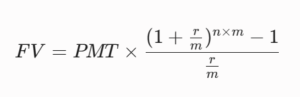
Unlike a standard savings account, a 401(k) portfolio grows through regular, automated contributions that compound over decades. The mathematical formula used to calculate the future value (FV) of periodic, end-of-period monthly contributions (PMT) compounding over time is:
How This 401(k) Calculator Evaluates Your Wealth
This calculator processes specific financial inputs to model your portfolio’s growth over time:
Most employers offer a matching contribution, which is essentially free money that helps your account grow faster. The calculator handles two primary matching models:
Key Financial Projections You Will Receive
Professional Strategies to Optimize Your 401(k) Performance
Secure the Full Employer Match
If your employer offers a match, contribute at least enough to capture the entire match. For example, if your employer matches up to 6% of your salary, setting your personal contribution rate to anything lower than 6% means leaving free compensation on the table.
Use the “Plus-1%” Annual Strategy
If you cannot afford to contribute the legal maximum immediately, start with a comfortable rate and increase your contribution by 1% each year. Aligning this 1% increase with your annual raise makes the adjustment easier to manage.
Be Mindful of Expense Ratios
While your employer chooses your 401(k) provider, you choose the underlying investments. Look for low-cost index funds with low expense ratios (ideally under 0.20%). High management fees can chip away at your compounding returns over several decades.
Catch-Up Contributions (Ages 50+)
If you are 50 or older, take advantage of IRS catch-up provisions. These rules allow you to contribute extra funds beyond the standard annual contribution limit, helping you build your savings as you near retirement.
Frequently Asked Questions (FAQ)
What is a good return rate to assume for a 401(k) projection?
For long-term planning, assuming an annual return of 6% to 8% is a conservative, realistic baseline. While the historical long-term average of the stock market is closer to 10%, factoring in inflation or opting for a more conservative asset mix as you age makes a lower estimate safer for retirement projections.
What is the difference between a Traditional 401(k) and a Roth 401(k)?
The main difference is when your contributions are taxed:
When am I fully owned of my employer’s matching contributions?
This depends on your company’s vesting schedule. While your personal contributions are always 100% yours, employer matching funds often vest over time (e.g., a 3-year cliff or a 5-year graded schedule). Be sure to check your company’s plan details to see when those matched funds are officially yours to keep if you leave the company.
To examine other core calculations, numeric conversion models, or system metric parameters, navigate through our comprehensive computational directories at /number-conversion/.